
A white-label seo onboarding checklist for link-building campaigns should confirm the client’s goals, link and publisher rules, approved budget or pricing model, placement volume, delivery cadence, expected turnaround, and reporting process before fulfillment starts. This guide helps SEO agencies decide whether a campaign is ready to launch, what information to collect from the client, and which approval gaps to resolve first.
Use it for guest posts, niche edits, digital PR, or a mix of link acquisition services delivered under your agency’s brand. The purpose is not to promise rankings or treat every backlink as interchangeable; it is to agree on a feasible, transparent delivery process that protects the client relationship and gives the fulfillment team clear acceptance criteria.
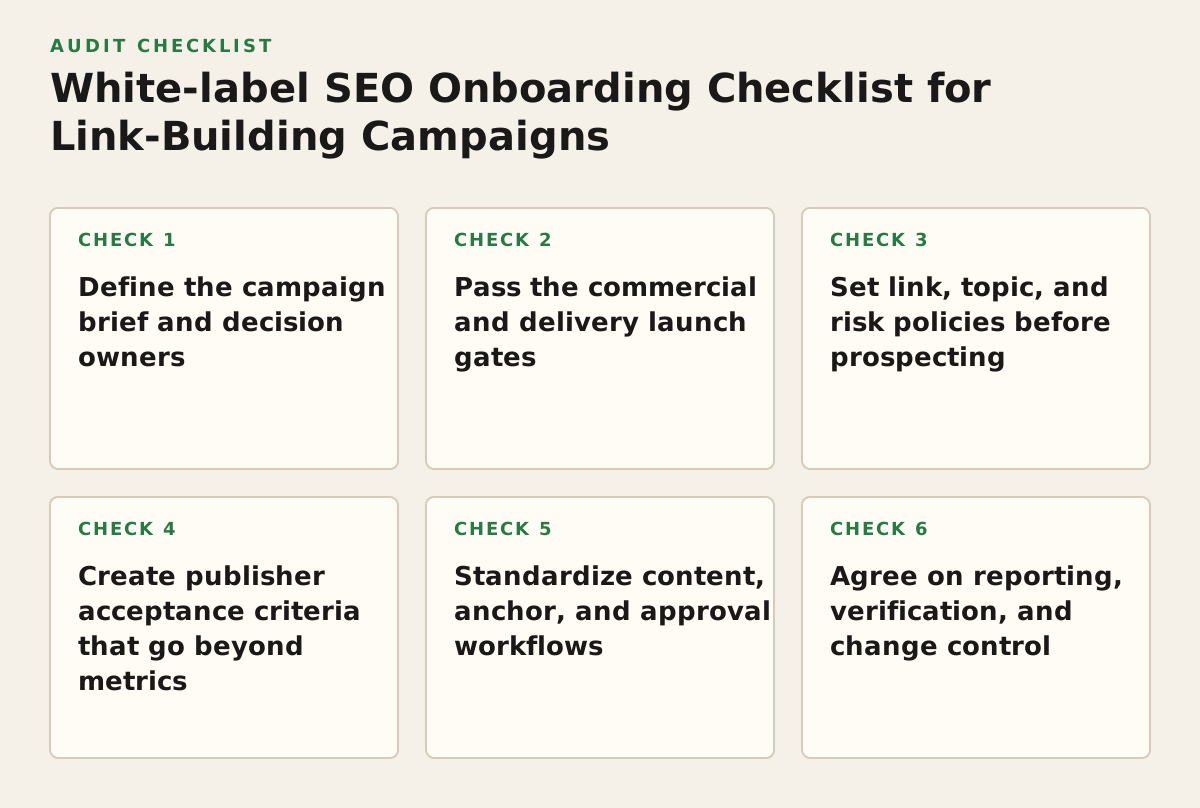
1. Define the campaign brief and decision owners
When it applies: Start here for every new client, market, or campaign scope. A brief turns a broad request—such as “build authority”—into instructions an account lead and fulfillment team can act on. It also identifies who can answer questions and approve changes.
Why it works: Link opportunities depend on the target site, audience, market, and page being promoted. If the agency gives a provider only a domain and a target URL, the provider may make assumptions about the client’s services, acceptable topics, or brand voice. Those assumptions create avoidable revisions and unsuitable placements.
Collect the minimum useful context
- Business and audience: products or services, customer type, priority geography, and any markets to exclude.
- SEO objective: target pages and topics, plus the role link acquisition is expected to play alongside content and technical SEO.
- Brand and risk rules: preferred terminology, prohibited claims or topics, competitor exclusions, and any regulated-industry review requirements.
- Decision owners: the agency contact for daily coordination and the person authorized to approve content, publishers, and scope changes.
Failure mode: Treating an existing SEO strategy as a complete link-building brief. It may not specify which pages are commercially important or whether the client will approve publisher examples. For a B2B software client, for example, “promote the product” is too broad; list the product page, the use case it supports, and the types of publications its buyers read.
Implementation example: Create a one-page brief with a sample topic, one approved target URL, one excluded topic, and named approvers. Ask the client to confirm it before prospecting. If the target page lacks useful information to cite, flag that as a content dependency rather than asking a publisher to compensate for it.
2. Pass the commercial and delivery launch gates
When it applies: This is a mandatory go/no-go check before a provider reserves capacity or begins outreach. An agency cannot assess feasibility from a general monthly retainer alone if nobody has specified the deliverables or service window.
Why it works: The approved commercial model sets the boundary for supplier selection and scope. Volume and cadence determine workload; turnaround expectations determine whether the work fits the client’s publishing calendar. Put all four in writing: approved budget or pricing model, placement volume, delivery cadence, and expected turnaround.
Record the terms in operational language
- Budget or pricing: approved campaign cap, per-placement pricing, retainer allocation, or another authorized model; state who approves out-of-scope costs.
- Volume: the number or range of placements authorized for the stated period, and whether that means proposed, approved, or live placements.
- Cadence: the intended schedule for proposals, approvals, and live placements—for example, monthly delivery rather than a single end-of-quarter batch.
- Turnaround: the expected time for each defined stage, such as a proposal, client review, draft, or placement, including which party’s approval pauses the clock.
Failure mode: Writing “as many links as possible within budget” or promising a fixed delivery date without allowing for publisher response and editorial review. That makes scope hard to measure and can pressure teams to accept weak opportunities. Do not present a delivery estimate as a guarantee unless the provider’s terms actually support it.
Implementation example: An illustrative agreement might authorize four placements per month for two months, use a pre-approved per-placement price, send publisher proposals in a weekly batch, and set an agreed review window for the client. Those figures are a planning example, not a universal benchmark. Replace them with terms the client and provider have explicitly approved. If any of the four gates is blank, mark the campaign not ready to launch.
3. Set link, topic, and risk policies before prospecting
When it applies: Set these rules whenever placements may be paid, sponsored, or created through editorial outreach, and be especially explicit for casino, betting, and iGaming campaigns. A link that satisfies one stakeholder’s preference may violate another stakeholder’s policy.
Why it works: A shared policy helps the agency distinguish an editorially suitable opportunity from a placement that merely has attractive metrics. Google identifies buying or selling links for ranking purposes as link spam and recommends qualifying paid links with rel="sponsored" or rel="nofollow"; make the intended relationship clear instead of promising a followed link as a condition of payment (Google Search spam policies; qualifying outbound links).
Agree on whether the campaign accepts sponsored or nofollow attributes, what disclosure is required, and what happens if a publisher changes a link after publication. For US-facing endorsements, the FTC says material connections should be disclosed clearly and conspicuously; agencies serving other markets should check the rules that apply there rather than treating US guidance as universal (FTC Endorsement Guides: What People Are Asking).
- List acceptable and prohibited topics, claims, and anchor text, including any restricted products or geographies.
- Specify whether the client requires review of the publisher, proposed topic, draft, or all three.
- State the acceptable link attributes and disclosure approach; do not guarantee an attribute that the publisher controls.
Failure mode: Treating “white-hat” as a label instead of an agreed process. For an iGaming client, a general entertainment publisher may be unsuitable even if its metrics look strong; conversely, a gambling-friendly site still needs audience, editorial, and disclosure review. Implementation example: Add an approval rule that any placement involving gambling claims, a restricted jurisdiction, or a paid editorial relationship requires the client’s named compliance contact to sign off before publication.
4. Create publisher acceptance criteria that go beyond metrics
When it applies: Use a written scorecard when multiple people source or approve publishers, or when the client has strict market and brand-safety requirements. It makes decisions more consistent without pretending that one metric can predict ranking impact.
Why it works: A publisher’s topical fit, real readership, editorial standards, and link context affect whether a placement makes sense for the client. Web Push’s stated approach is to hand-vet DR 30+ publishers with real organic traffic and avoid link farms and PBNs; treat any such threshold as a provider or campaign criterion, not proof of quality by itself.
| Review area | Approve when | Hold or reject when |
|---|---|---|
| Audience and geography | The publication plausibly serves the intended reader or market. | The audience or location conflicts with the brief. |
| Editorial fit | The proposed topic belongs on the site and offers reader value. | The article appears designed only to host a client link. |
| Site quality | Recent pages, authorship, and visible editorial standards support legitimacy. | The site shows signs of a link farm, PBN, or unrelated paid-link inventory. |
| Link context | The target page and anchor fit the surrounding content and policy. | The requested link or anchor would be misleading, forced, or disallowed. |
| Risk and disclosure | Required approvals, attributes, and disclosures are agreed. | A stakeholder or market requirement remains unresolved. |
Failure mode: Approving a site because its DR or estimated traffic clears a threshold, without checking recent content or topical relevance. Metrics can help shortlist prospects, but they are not a substitute for inspection. Google’s Search Console links report can help a site owner review links Google has discovered, but it is not a complete audit of every link; use it as one input, not a guarantee of placement value (Search Console Links report).
Implementation example: Ask the provider to submit a publisher URL, proposed topic, target URL, relevant audience or market, and any known paid-placement terms. The agency reviewer records “approve,” “revise,” or “reject” with a short reason. This makes a rejection actionable: “audience mismatch” is more useful than “not authoritative enough.” For clients building a broader acquisition plan, align the scorecard with their authority link building priorities rather than selecting isolated placements.
5. Standardize content, anchor, and approval workflows
When it applies: This workflow matters when the provider supplies guest-post content, edits existing pages, or needs client input before contacting publishers. It is also useful when agency account teams must keep the client’s identity separate from the fulfillment partner’s.
Why it works: Clear handoffs prevent the client from reviewing the wrong thing at the wrong time. Agree whether the agency approves publisher opportunities first, whether the client reviews outlines or drafts, and who checks factual claims and links. Keep anchors natural to the sentence; a commercial keyword inserted where it does not belong can undermine both readability and editorial acceptance.
Make approvals finite and auditable
- Submit the publisher and topic against the acceptance criteria.
- After approval, confirm the target page, suggested anchor options, and content brief.
- Review a draft for accuracy, brand fit, and policy—not for unsupported claims or forced keyword repetition.
- Record the final live URL and any agreed follow-up, such as correcting a broken link.
Failure mode: Allowing multiple client stakeholders to give conflicting feedback without naming a final approver. Another common failure is requiring draft approval but never defining how long review takes; the provider then cannot distinguish a production delay from a client-side pause.
Implementation example: For a B2B client, the product marketer checks technical claims, while one SEO lead approves the destination and anchor. For a casino campaign, route jurisdiction-sensitive copy through the client’s designated reviewer. Record approval and requested changes in one shared tracker so the white-label provider sees the agency’s final instruction, not competing comments.
6. Agree on reporting, verification, and change control
When it applies: Establish reporting rules before the first placement, especially when your agency will report the work under its own brand. Clients need to know what “delivered” means and how exceptions are handled.
Why it works: A consistent record connects the approved opportunity to the live result. It also separates delivery reporting—what was placed—from performance reporting, which involves many other SEO factors and should not be attributed to a single backlink without evidence.
- Track the publisher, live URL, target URL, anchor, publication date, topic, and approval status.
- Record the agreed link attribute or disclosure where known, and note if it differs from the approved plan.
- Define what counts as delivered and how the agency reports a rejected pitch, delayed publication, changed URL, or removed placement.
- Set a process for notifying the client and provider when a page or campaign scope changes.
Failure mode: Reporting only domain metrics and placement counts. That leaves the agency unable to show whether the link is live, points to the right page, or matches the approved brief. Google notes that its links report is based on links Google has found and may not show every link, so it should not be treated as the sole source of campaign verification (Search Console’s report guidance).
Implementation example: Deliver a monthly tracker with one row per approved opportunity and a status such as proposed, approved, in production, live, or exception. If a published page uses a different destination or link attribute than approved, flag it for review rather than quietly counting it as a completed placement. Agencies coordinating multiple link building services can use the same status definitions across fulfillment types while retaining the relevant details for each one.
7. Launch only after a sequenced readiness check
When it applies: Use this final gate at handoff from sales or account planning to the fulfillment team. It turns the checklist into a launch decision rather than a document that gets completed and then ignored.
Why it works: A sequence exposes dependencies early: the team should not prospect before the budget is approved, and it should not pitch content before the client has approved the topic and link rules. A named owner and a recorded exception make the campaign easier to pause or revise responsibly.
- Confirm the brief: goals, target URLs, audience, market, restrictions, and decision owners are recorded.
- Approve commercial terms: budget or pricing model, placement volume, cadence, and expected turnaround are written down.
- Approve the policy: publisher criteria, link attributes, disclosures, anchor guidance, and any regulated-market reviews are understood.
- Test the workflow: identify who submits, approves, revises, and reports each placement, including the client’s review window.
- Authorize the first batch: release only the agreed scope to fulfillment and track proposals against the same acceptance criteria.
- Review the first reporting cycle: resolve process gaps before increasing volume or changing the scope.
Failure mode: Starting outreach while one stakeholder still expects a different price, delivery pace, or risk policy. Mark unresolved items as blockers and assign an owner and due date instead of asking the provider to “start carefully.”
Recommendation: Launch when the commercial gates and approval path are explicit; otherwise, pause and close the gaps before reserving delivery capacity. Web Push offers white-label link building for agencies, including guest posts, niche edits, authority links, and digital PR; review the Web Push approach if that fits your fulfillment needs.
Authored with NotFair SEO